
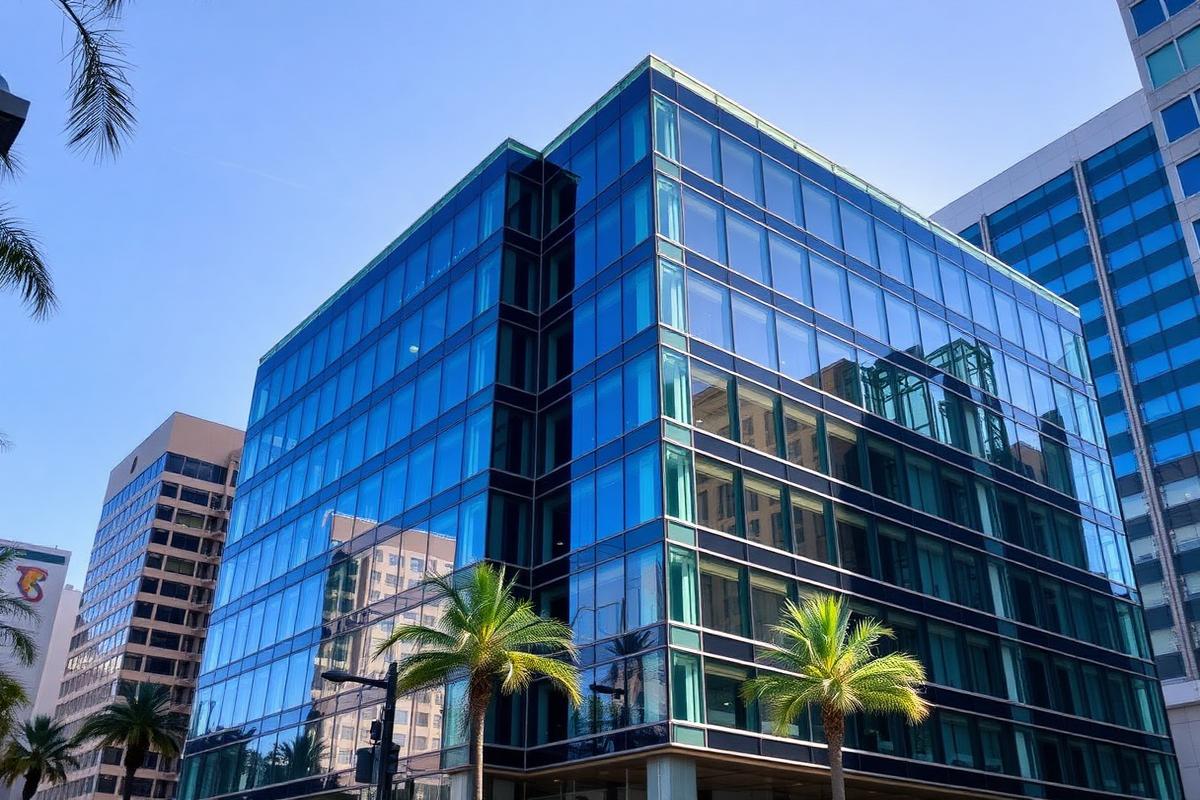
For property owners, managers, and tenants.
Commercial properties in San Diego face mold-related concerns from many directions: tenant indoor air quality complaints, recent water intrusion events, HVAC performance concerns, pre-lease due diligence, lender requirements, and post-incident insurance documentation. A commercial mold inspection from Wiseman is structured around the people who actually have to make decisions based on the results.
We work with downtown high-rises, Mission Valley office parks, retail centers across Hillcrest and Little Italy, Kearny Mesa industrial buildings, La Jolla professional offices, Sorrento Valley R&D space, Chula Vista multi-family, restaurants throughout North Park and South Park, and hospitality properties across the San Diego coast. Each property type carries its own typical concerns, and our methodology adapts.
Scope and methodology
A commercial mold inspection begins with a clear scoping conversation: are we responding to a tenant complaint, a recent water event, a pre-lease assessment, or a regulatory or insurance request? The answer shapes the inspection plan. Typical scope includes a visual survey of all areas of concern, moisture mapping of suspect substrates, hygrometer readings to capture HVAC effect on relative humidity, thermal imaging of envelope and ceiling penetrations, evaluation of HVAC air handlers and condensate drainage, and laboratory air or surface sampling when warranted.
HVAC focus
In commercial properties, HVAC is one of the most common moisture and IAQ contributors. We assess air handler condition, filter type and seating, evaporator coil cleanliness, condensate drain integrity, duct insulation, and supply and return distribution. Where appropriate, surface samples from interior coil or plenum surfaces complete the picture.
Multi-family considerations
For multi-family apartment and condo properties, we coordinate with property managers, HOAs, and tenants to minimize disruption. Inspections of common areas, mechanical rooms, and selected units are organized for an efficient single-visit schedule. Reports are written with the understanding that several stakeholders may review them.
Documentation that holds up
Commercial mold reports are built for accountability. Every observation is photographed, every measurement is recorded with location context, every laboratory sample is logged on a chain-of-custody form, and every conclusion is traceable to the underlying evidence. The format is appropriate for insurance carriers, attorneys, lenders, and regulatory bodies.
Independence is especially valuable here
Commercial mold concerns often involve multiple parties — owner, tenant, contractor, insurance carrier. A report from an independent inspector that does not perform remediation carries unambiguous weight. There is no incentive for us to find work that does not exist, and no incentive to minimize work that does. That neutrality benefits every stakeholder in the conversation.