
When you need facts, not opinions.
Mold testing in San Diego is the science layer on top of a visual inspection. Where an inspection answers, "What does this property look like?", testing answers, "What is actually present, and how does it compare to normal outdoor conditions?" The combination is powerful — particularly for insurance claims, real estate negotiations, and post-remediation verification.
We perform mold testing as an independent inspection firm. We are not affiliated with any remediation contractor and we collect no commission on remediation work. That structure matters: lab results from a company that also profits from removing mold are easy to question. Lab results from an independent inspector are not.
The three core mold testing methods
Air sampling uses calibrated pumps that draw a known volume of air through spore-trap cassettes. The cassettes are sent to the laboratory, where spores are counted under a microscope and categorized by genus. We always collect an outdoor control sample so your indoor readings have a meaningful baseline. Without an outdoor control, indoor spore counts cannot be properly interpreted in San Diego's coastal environment.
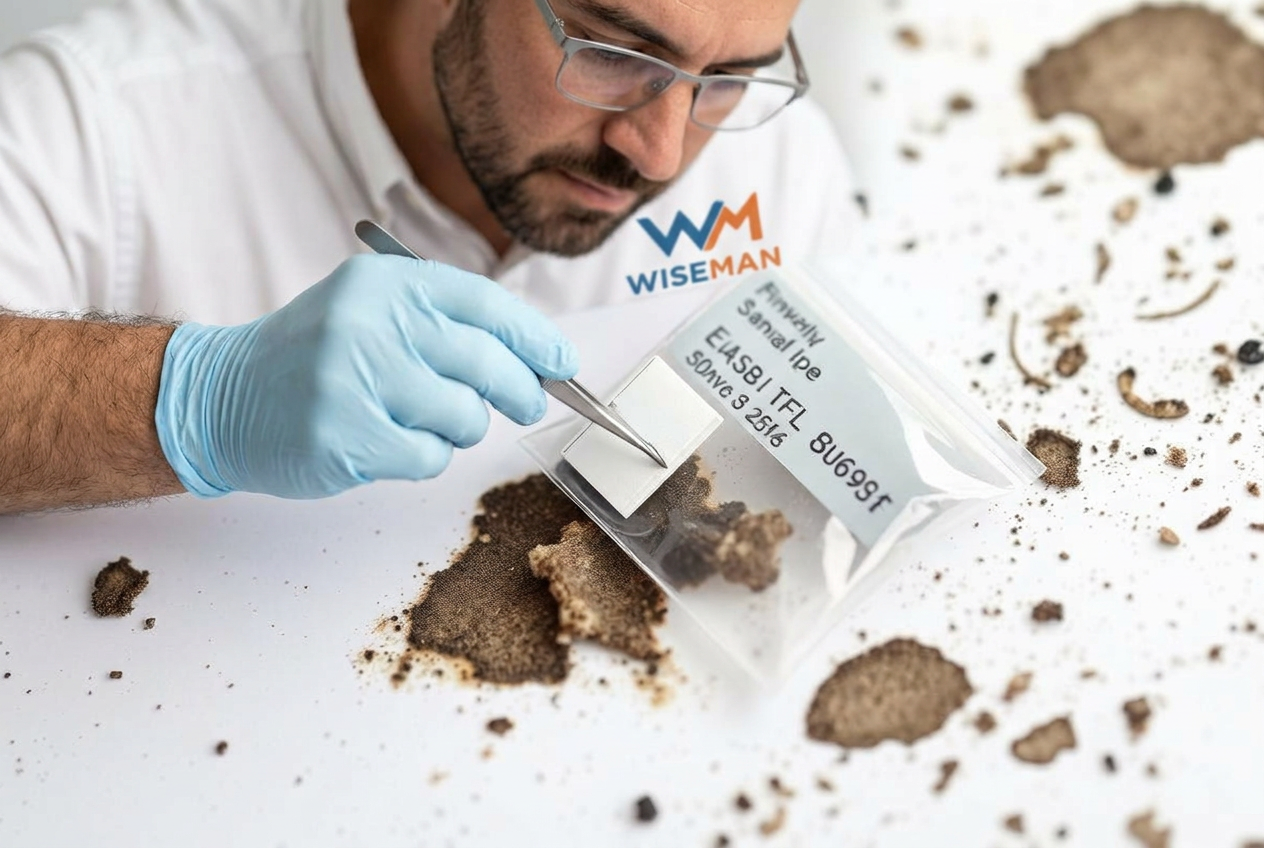
Surface sampling covers tape lifts, swabs, and bulk material samples. A tape lift uses a clear adhesive strip pressed against suspect growth — the lab can then identify whether the discoloration is mold and which genus is present. Swabs work well on irregular surfaces, and bulk samples (a small piece of drywall, insulation, or wood) are sometimes appropriate for documenting embedded contamination.
Wall cavity sampling uses a small-diameter probe to test the air inside concealed wall cavities when hidden contamination is suspected. This is a targeted technique reserved for situations where moisture data and thermal imaging strongly indicate an issue but the cavity has not yet been opened.
How we choose the right test
The right test depends on what you are trying to learn. For "is the air in my home affecting my family?", air sampling with an outdoor comparison is almost always appropriate. For "what is that stain on my baseboard?", a tape lift is the most efficient method. For "did the remediation contractor actually solve the problem?", a structured post-remediation verification protocol combines visual inspection, moisture mapping, and air sampling against documented clearance criteria.
Understanding your results
Laboratory results list mold genera and their concentrations. The numbers themselves are not meaningful in isolation — what matters is how they compare to your outdoor baseline, what genera are present, and how those findings line up with the moisture and visual data from the inspection. We translate all of that into a plain-language summary so you can make an informed decision, whether that means scheduling remediation, monitoring conditions, or simply walking away from a real estate deal with clean documentation.
Quality assurance
Every sample is documented with a chain-of-custody form, collected in accordance with manufacturer and industry protocols, and analyzed by an independent AIHA-accredited laboratory. We retain copies of all original lab data, calibration records for our sampling equipment, and field documentation — important if your results are ever needed for insurance, legal, or real estate purposes.