
Confirming what your eyes already suspect.
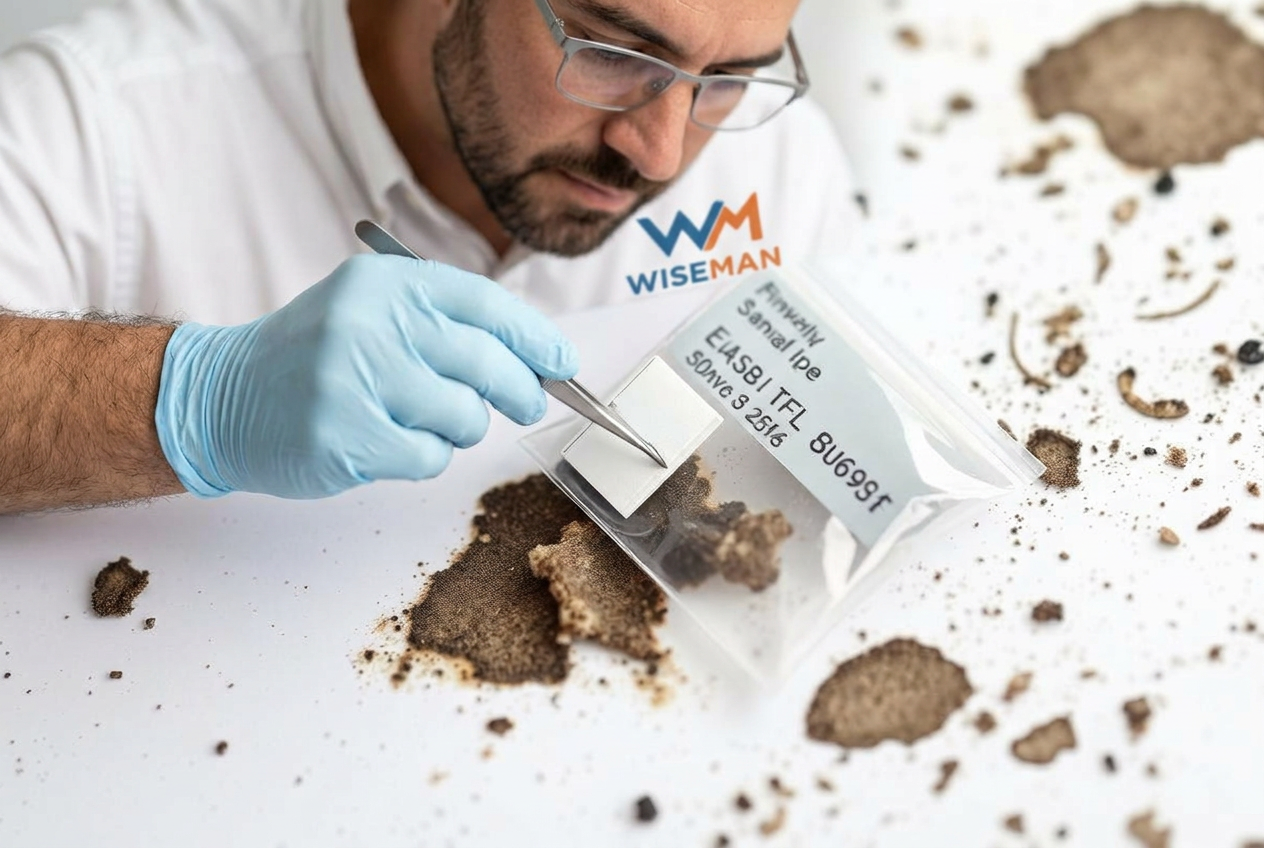
Not every stain is mold. Mineral deposits, soot, mildew, and discoloration from previous repairs can all look like mold to the naked eye. Surface sampling provides definitive identification. By collecting a small physical sample and submitting it for laboratory analysis, we confirm exactly what the substance is and which genus is present.
Surface sampling is also one of the most cost-effective forms of mold testing in San Diego. When growth is visible and you simply need confirmation, a single tape lift can answer the question quickly and inexpensively — without committing to a full air sampling protocol.
Three core surface sampling methods
Tape lift sampling uses a clear adhesive slide pressed against the suspect surface. The slide captures spores, hyphae, and fragments, preserving the orientation of any growth structures — which helps the laboratory determine whether growth is actively colonizing the surface. Tape lifts are ideal for drywall, painted surfaces, smooth wood, and similar materials.
Swab sampling uses a sterile cotton or polyester swab to collect material from irregular, porous, or hard-to-reach surfaces. Tile grout, baseboards with intricate profile, HVAC interiors, and the underside of cabinets are all good candidates for swab collection.
Bulk sampling involves removing a small piece of the substrate itself — a drywall coupon, a section of insulation, a wood fragment — and sending the material to the laboratory. Bulk samples are useful when contamination appears to be embedded or when the integrity of the material is itself in question.
When surface sampling is the right tool
Surface sampling is most appropriate when you can see suspect growth and need to confirm what it is. Common scenarios include a dark stain in a closet ceiling after a roof leak, discoloration in a Mission Hills bathroom corner, a fuzzy patch behind a Hillcrest cabinet, or unusual residue inside the air handler of a La Jolla coastal home. In each case, a quick sample yields a definitive answer.
Surface sampling vs. air sampling
The two are complementary, not interchangeable. Surface sampling tells you what is present on a specific surface. Air sampling tells you what is present in the breathable air. Many investigations include both — for example, a tape lift to confirm visible growth plus air sampling to evaluate broader indoor air quality. We make the recommendation based on what you are trying to learn.
Documentation that holds up
Every surface sample is photographed in place before collection, labeled with location and substrate, logged on a chain-of-custody form, and shipped to an AIHA-accredited laboratory. The resulting report includes the original lab data, our interpretation, and recommendations. The format is suitable for use in real estate transactions, insurance claims, and landlord-tenant disputes when documentation is required.