
Trust, but verify.
A remediation contractor's job is to remove mold and the materials that support it. A verification inspector's job is to confirm that they did. These are two separate functions, and they should never be performed by the same company. When a remediation contractor clears their own work, the clearance is structurally compromised — there is an incentive to declare success. Independent post-remediation verification eliminates that conflict.
Wiseman Mold Inspection provides post-remediation verification across San Diego County for homeowners, property managers, attorneys, insurance carriers, and remediation contractors who value third-party confirmation of their work. Our process follows industry-aligned clearance criteria and produces documentation that holds up in any context.
What a verification inspection includes
A typical post-remediation verification begins with a review of the original scope of work — what the remediation contractor was hired to do and what their documentation says they completed. We then perform a structured visual inspection of the containment area while it is still accessible (before drywall is closed back up wherever possible). We confirm that affected materials have been removed to documented standards, that visible dust and debris have been adequately addressed, and that the contained space is in a condition appropriate for clearance testing.
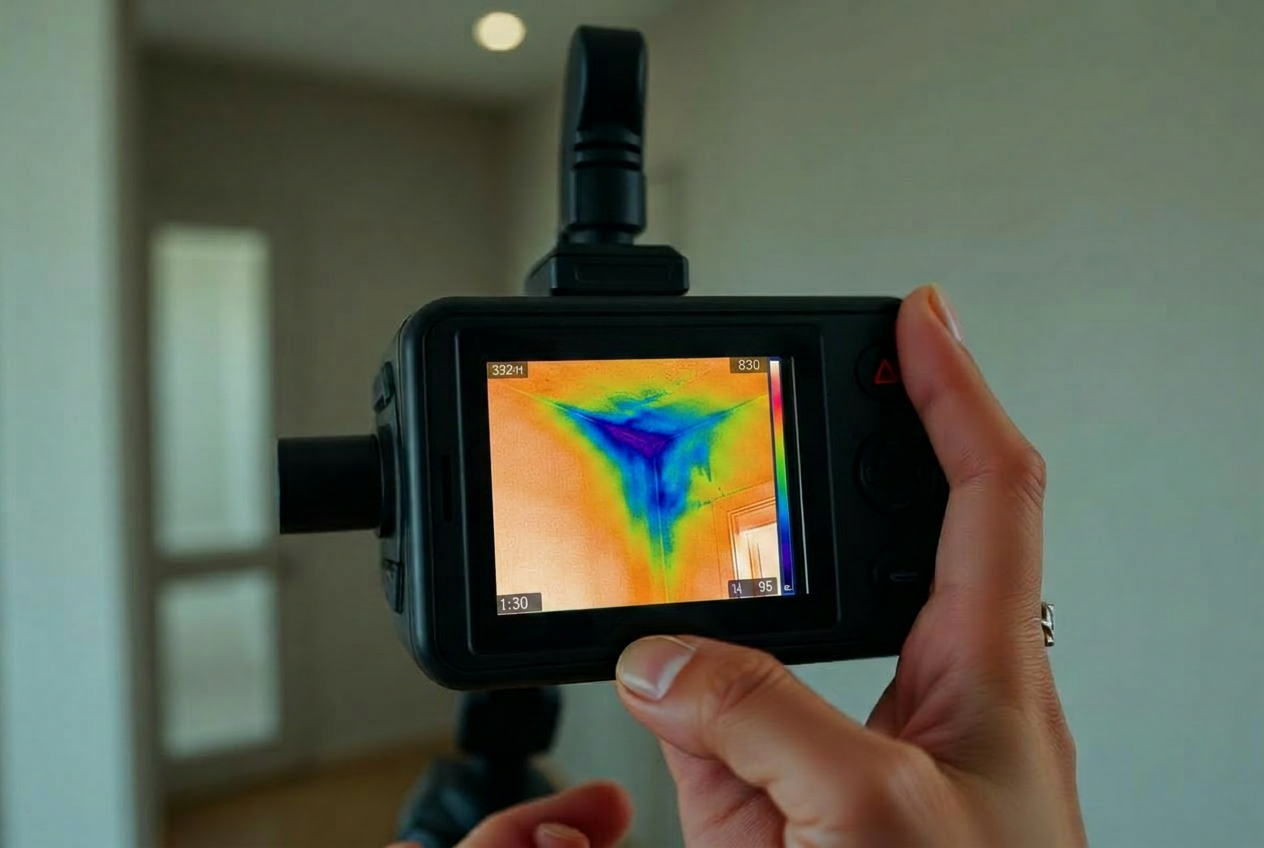
Calibrated moisture readings verify that all remaining materials are within dry baseline ranges. Thermal imaging supports this. Air sampling — typically including outdoor control plus interior containment samples — is collected and submitted to an AIHA-accredited laboratory. Results are compared to documented clearance criteria appropriate to the scope of remediation.
Clearance criteria, plainly explained
Clearance is not a single magic number. It is a structured evaluation against several criteria simultaneously: a clean visual condition, normalized moisture readings, no evidence of remaining microbial growth, and air sampling results that are consistent with the outdoor baseline and do not show elevated indicator genera. Each of these elements has to be satisfied. The final report makes clear which criteria were evaluated and which were met.
Timing matters
The best time for verification is after remediation is complete and after the area has been thoroughly cleaned and aired out — but before drywall, flooring, or other finishes are reinstalled. That window allows the inspector to visually confirm conditions while access is still possible. We coordinate scheduling with the remediation contractor and the property owner to hit that window cleanly.
Outcomes
Most verification inspections result in a clear, documented clearance. When that happens, the owner has independent written confirmation that the remediation achieved its objectives. When clearance criteria are not met, the report documents exactly what was not met — which gives the remediation contractor a defined list to address. Re-verification follows the contractor's corrective work.
For insurance and litigation
Independent post-remediation verification reports are routinely used in insurance claim documentation and, in some cases, litigation. The combination of independence, structured methodology, accredited laboratory analysis, and clear documentation creates evidence that withstands scrutiny.