
After a leak, the clock starts.
Water damage and mold growth are connected by time. Mold can begin developing on wet building materials within 24 to 48 hours. By the time visible growth or musty odors appear, the underlying conditions may have persisted for weeks. A post-water-damage mold inspection in San Diego serves two distinct purposes: documenting current conditions promptly, and verifying that any drying or restoration work actually achieved its goal.
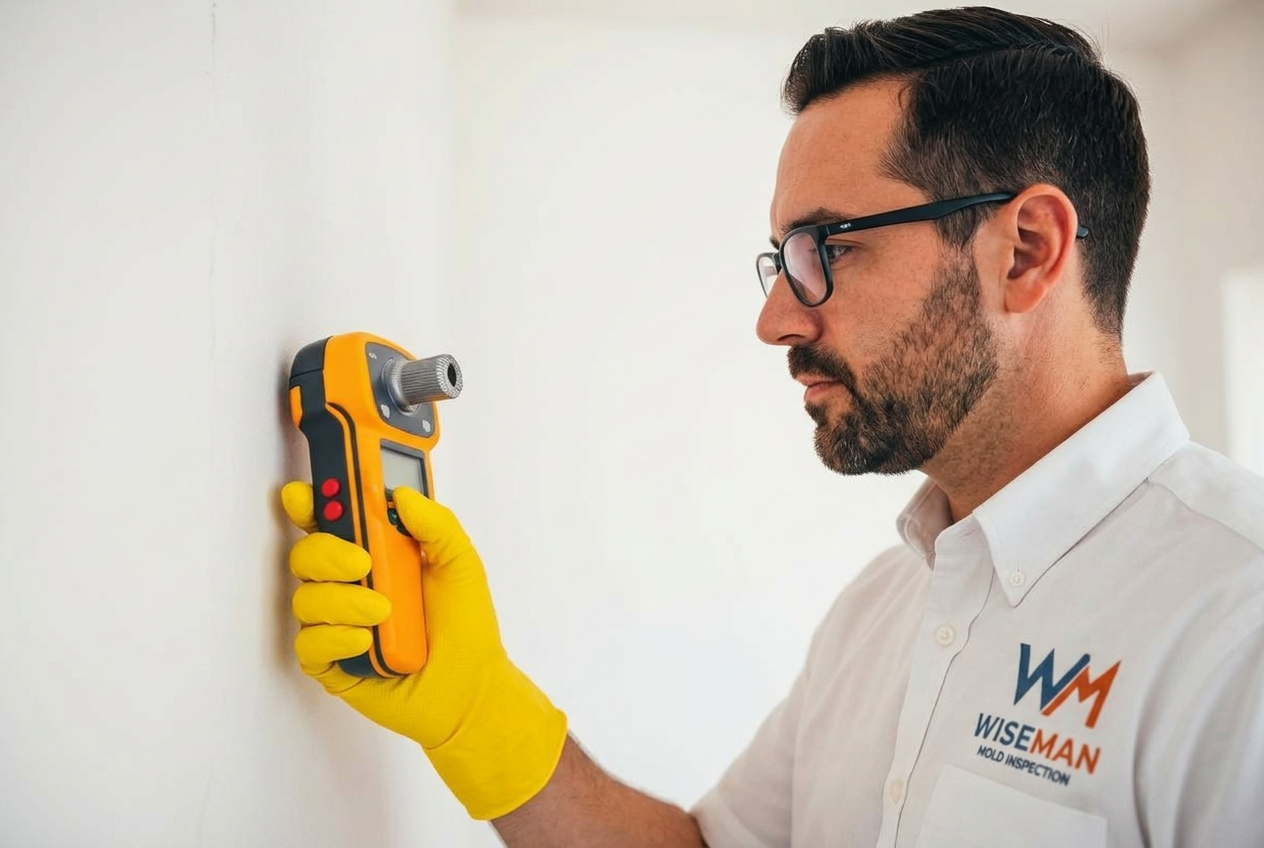
We perform post-water-damage inspections independently of restoration contractors. That separation matters. A restoration company drying out a property has a legitimate scope of work, but it also has every incentive to declare the job complete. An independent inspection — using calibrated moisture meters and thermal imaging — provides objective confirmation that hidden materials are actually dry and that no growth started during the wet period.
When to call
Common triggers include a recent slab leak, a burst plumbing supply line, a roof leak during a winter storm, dishwasher or refrigerator water-line failure, washing machine hose failure, HVAC condensate overflow, water heater failure, and shower-pan leaks. In coastal areas, wind-driven rain through aging stucco creates similar concerns. Whenever building materials have been wet for more than 24 hours, an inspection is warranted.
What we evaluate
Our post-water-damage inspection includes a structured visual survey of affected and adjacent areas, calibrated moisture readings on all suspect substrates, thermal imaging to identify any residual hidden moisture, hygrometer mapping of relative humidity and dew point, photo documentation, and laboratory air or surface sampling when conditions warrant. We compare current moisture readings against established dry-baseline ranges and against any baseline readings the restoration contractor recorded.
Insurance claim support
Our reports are formatted with insurance submission in mind. Documentation includes the date and time of inspection, location and description of all readings, photographs paired with measurements, laboratory chain-of-custody, and a written interpretation. We coordinate with adjusters and restoration contractors as needed. Coverage decisions are ultimately made by your carrier, but well-documented independent findings strengthen any submission.
Coordination with restoration
We work alongside reputable San Diego water damage restoration contractors regularly. Many ask us to perform independent post-drying verification specifically because our findings carry more weight than internal documentation. That approach benefits the homeowner, the contractor, and the insurance carrier alike.
What if mold is already present?
If mold growth is found, our report documents it clearly with photographs, location, suspected source, and laboratory identification where samples have been collected. Because we do not perform remediation, you are free to choose any qualified remediation contractor based on the scope our report describes. We are also available for post-remediation verification once any remediation work is complete.